Blog
Day trading is one of the most misunderstood ways to make money.
On one hand, you see stories of traders making thousands of dollars in a single day, growing small accounts into something significant. On the other hand, there are far more quiet stories: people who deposit money, trade for a few weeks or months, and eventually lose everything.
So what’s really happening?
The truth is, the market itself is not the problem. The real issue is how most people approach trading. Without structure, discipline, and proper risk management, even the best opportunities turn into losses. And this is not just opinion — it’s reflected in industry data.
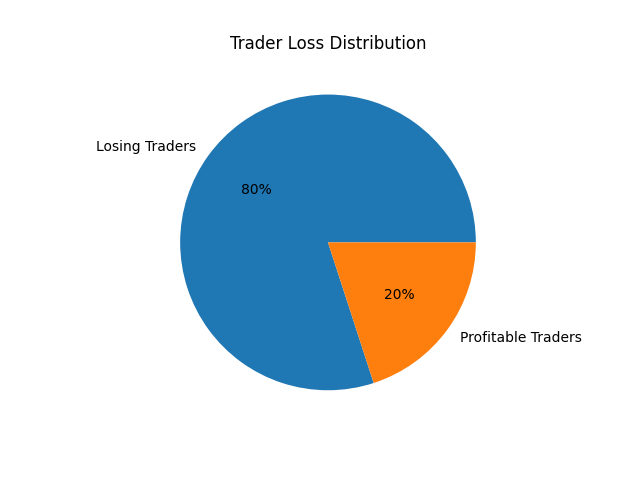
Studies and broker reports consistently show that between 70% to 90% of retail traders lose money over time. That statistic alone tells you something important: blowing an account is not an exception, it’s the norm for unprepared traders.
The Reality Behind the Numbers
If roughly 80% of traders lose money, that means only about 2 out of every 10 traders achieve consistency. And those who succeed are not necessarily smarter — they simply approach trading differently.
They Enter the Market Without Understanding It
Many beginners treat trading like something they can “figure out on the go.” They open a chart, watch a few videos, join a signal group, and start risking real money almost immediately. What they don’t realize is that the market operates on structure, price levels, liquidity zones, timing, and behavior patterns. Without understanding these, every trade becomes a guess. And guessing with money is expensive. The traders who last are the ones who slow down first. They spend time observing charts, backtesting strategies, and understanding why price moves — not just where it moves.Emotional Trading: The Fastest Way to Lose Money
One of the clearest differences between profitable and struggling traders is emotional control. When traders are driven by fear, frustration, or excitement, their decisions become reactive instead of intentional. You will often see a cycle like this:- A trader takes a loss
- Immediately tries to “win it back”
- Increases position size
- Takes another loss
- Repeats the cycle
Poor Risk Management Destroys Accounts
Most beginners focus on how much they can make from a trade. Professionals focus on how much they can lose. This difference in mindset is everything. When a trader risks too much per trade, even a small losing streak can cause significant damage. Losing 50% of an account doesn’t just mean you are halfway down — it means you now need a 100% gain just to break even. That’s why experienced traders emphasize small, controlled losses. They understand that survival in the market is more important than quick wins.Lack of Discipline (Even With a Good Strategy)
It’s easy to assume that struggling traders simply don’t have a good strategy. But in reality, many traders lose money even when using profitable systems. The problem is execution. Discipline means:- Taking only valid setups
- Sticking to predefined risk
- Not interfering with trades emotionally
Trading From Desperation
Another major reason traders blow accounts is the emotional pressure they bring into the market. Many people start trading because they urgently need money — to pay bills, recover losses, or fix financial problems. While that motivation is understandable, it creates a dangerous mindset. When every trade “has to work,” the trader becomes:- Impatient
- Over-leveraged
- Emotionally attached to outcomes
Overtrading and Lack of Structure
A surprising number of traders believe that being active all day increases their chances of making money. In reality, it often does the opposite. Overtrading leads to:- Lower-quality setups
- Increased emotional fatigue
- Higher transaction costs
- More exposure to risk
Jumping Between Strategies
Consistency in trading comes from mastery, not variety. Yet many traders constantly switch strategies. They try something for a few days, experience a loss, and immediately move to something else. This creates a cycle where:- No strategy is tested properly
- No skill is fully developed
- Confidence is never built
Final Thoughts: Why Most Traders Fail
Blowing an account is rarely caused by a single mistake. It’s usually the result of repeated patterns:- Entering the market without proper understanding
- Trading emotionally instead of strategically
- Risking too much on individual trades
- Lacking discipline and consistency
- Chasing quick money instead of building skill
Stop focusing on how much you can make — instead focus on how long you can stay in the game. In trading, survival comes first, and once you learn to survive consistently, profit becomes inevitable.